SPLITfix™ · Greenwich, CT
Keep the length. Remove the damage.
Is your hair growing, but breaking before you see the length?
Hair that never seems to get longer is often not a growth problem. Split and fractured areas travel up the strand, catch on the brush, and snap. The length arrives and then leaves again. SPLITfix is a hair breakage treatment built around removing what is already compromised so the length you grow has a chance to stay.
Educational guidance only. A proper assessment is needed before recommending treatment.
Client proof
Same client. Seven months apart.
The comb is held in the same position in both photographs. What changes is how much hair is actually there when the comb passes through the section. Labels stay outside the photographs, and the zoom controls are yours to use.
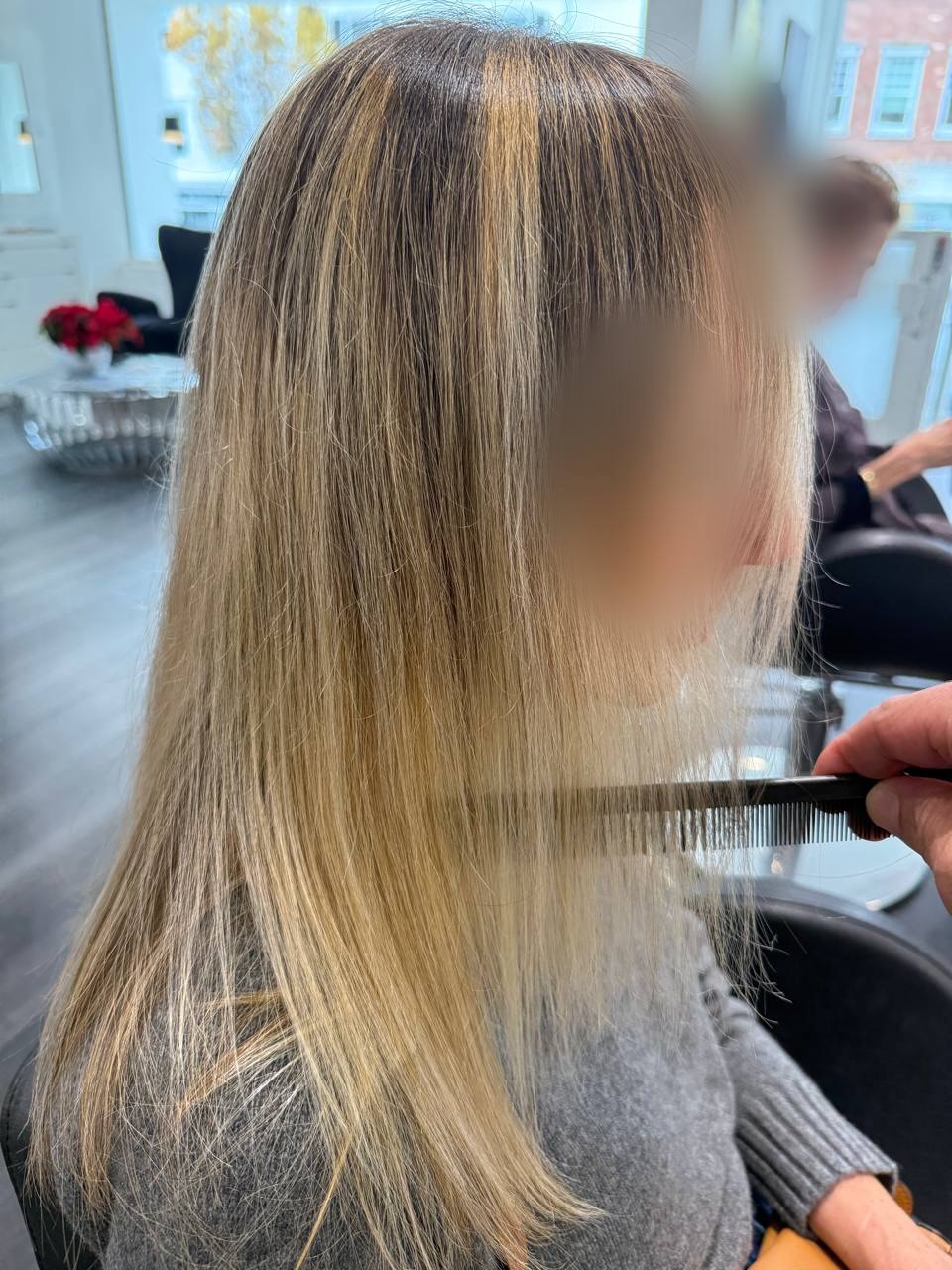
At the start. The section reads thin and uneven where the comb passes through.
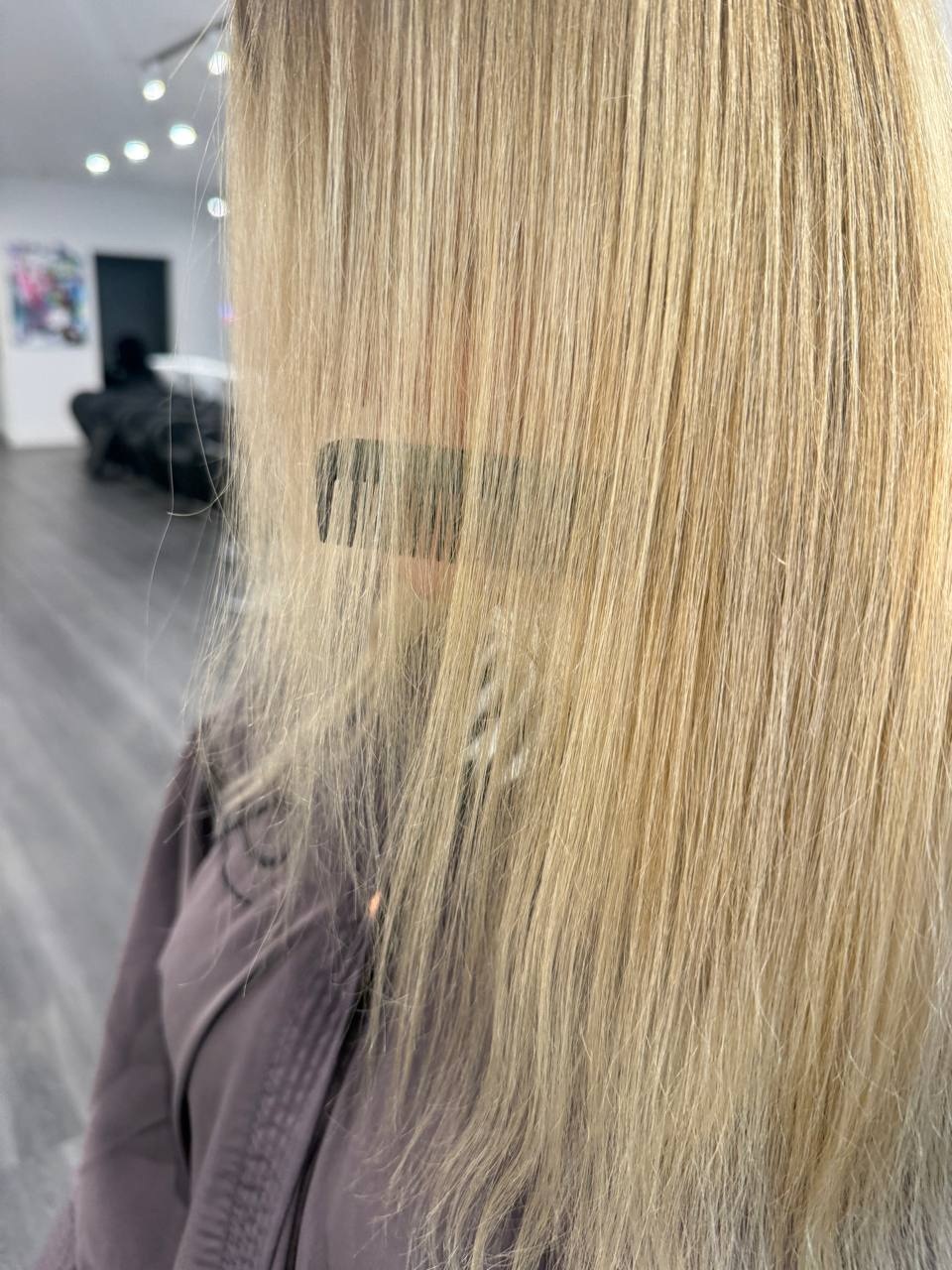
The same client, roughly seven months later, with compromised areas removed over a series of sessions.
Not new follicles. Better visible retention.
Documented client photographs from salon observations. Individual results vary.
Do this tonight
The at-home comb test.
You do not need a salon to see the pattern. You need dry hair, a mirror, and a comb in a colour that contrasts with your hair.
- 01
Start with dry, detangled hair. Wet hair hides the outline.
- 02
Place a contrasting comb behind a section, close to the mid-lengths.
- 03
Move the comb slowly toward the ends and watch where the hair thins out against it.
- 04
Repeat it the same way, in the same light, whenever you want to track a change.
The comb does not diagnose the cause. It helps you see the pattern.
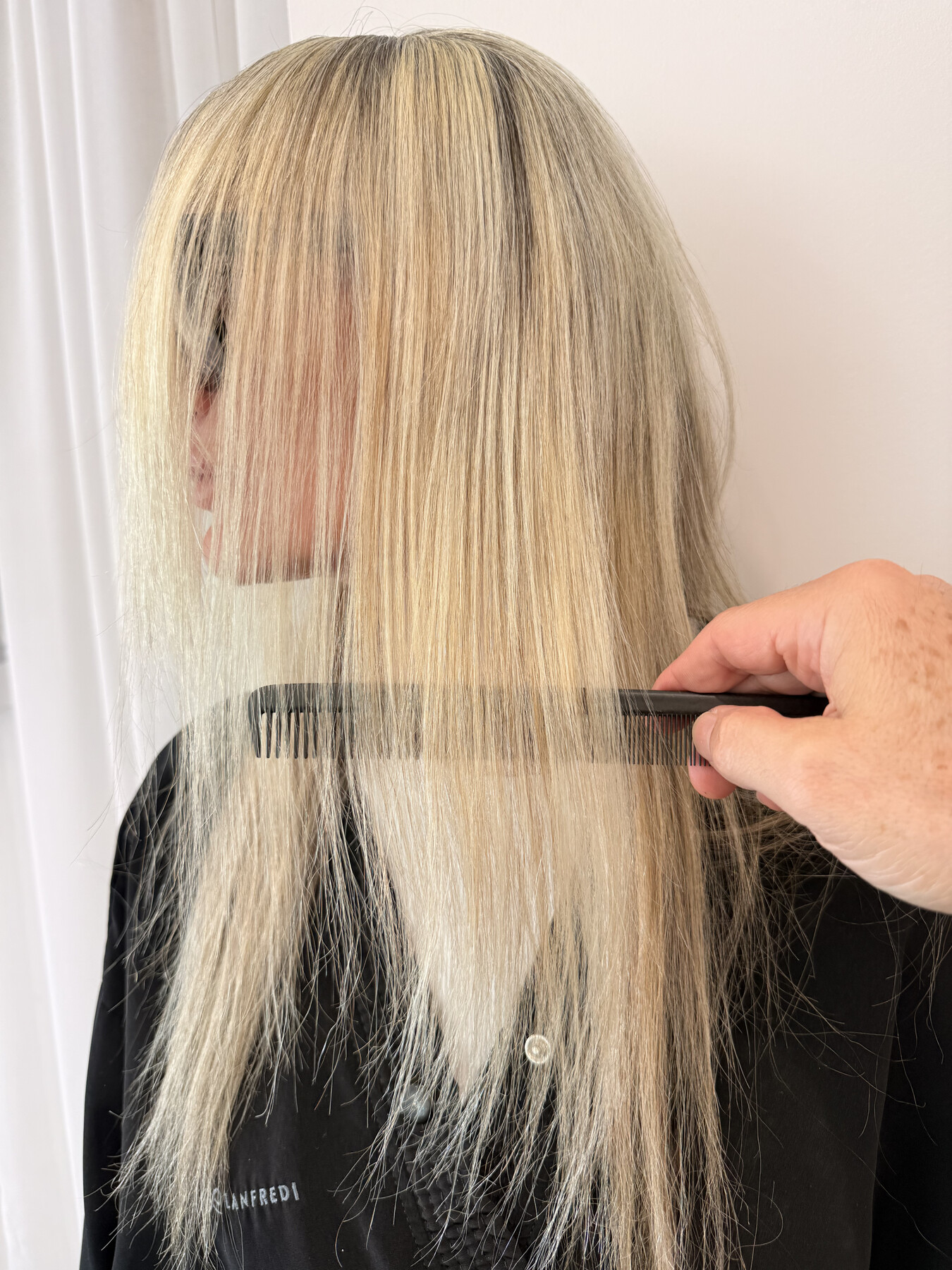
This photograph shows how to hold the comb. It is a demonstration of the technique, not evidence of a result.
Documentary evidence
What the microscope actually captured.
Use the zoom controls to inspect each photograph. Labels stay outside the image so you can see what the microscope captured.
These are documentary captures taken during salon observations. They are not stock images, illustrations, or generated microscopic detail, and nothing in them has been smoothed, redrawn, or retouched.

Strands showing a rough, flaky surface along the fibre rather than a smooth outer layer.
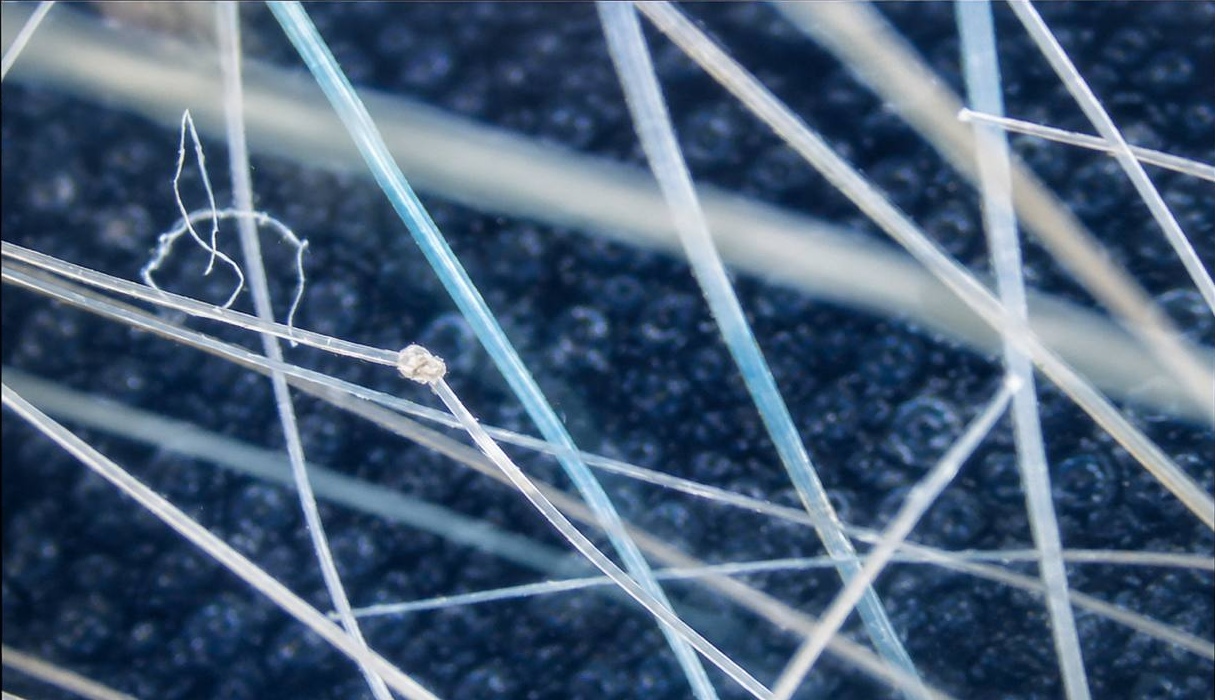
Crossing strands with a small amount of attached material sitting on one fibre.
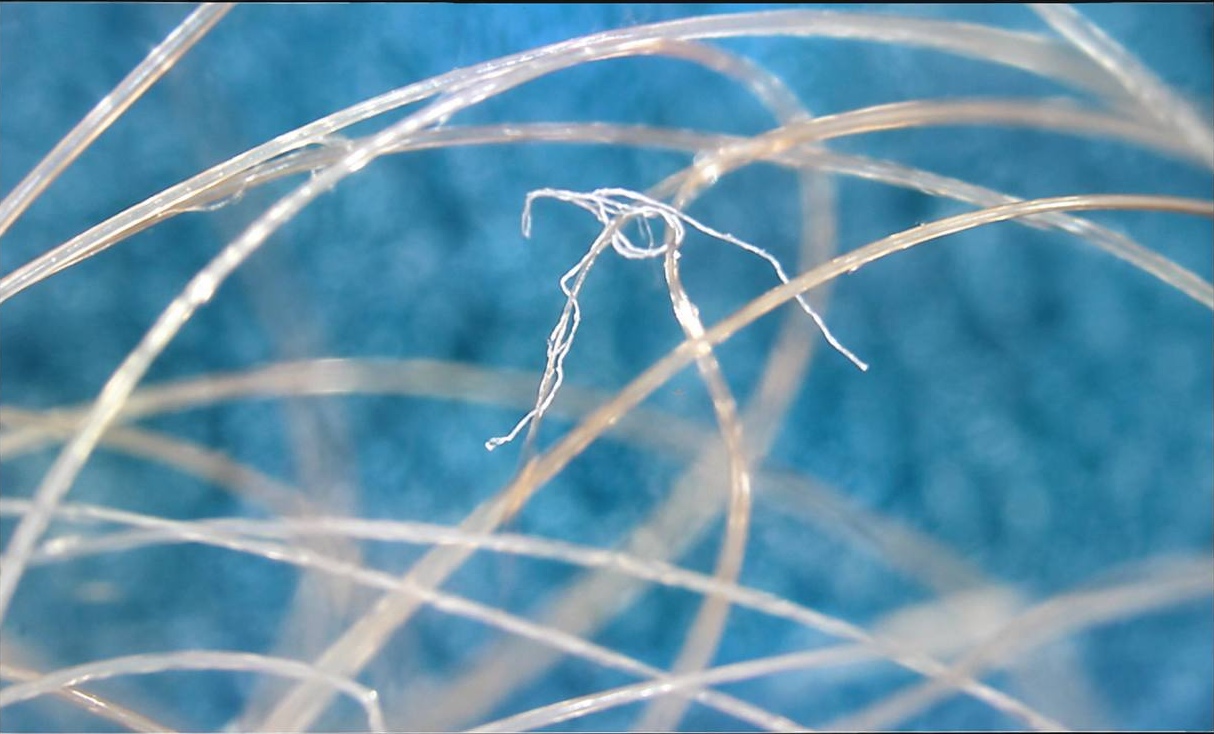
A fibre that has looped and knotted back on itself among the surrounding strands.
The mechanism
How damage becomes resistance, then breakage, then disappearing length.
Lifted and fractured areas can create more resistance. A split strand cannot become whole again. Everything below follows from those two facts.
01
The surface roughens.
The outer layer lifts and flakes instead of lying flat.
02
Strands catch on each other.
Rough fibres cross, hold onto material, and stop sliding past one another.
03
Fibres loop and knot.
A single fibre wraps back on itself and forms a hard point in the length.
04
The brush meets resistance.
Ordinary brushing catches those rough and fractured areas instead of passing through.
05
The length quietly leaves.
Repeated resistance means repeated snapping, so new growth never shows as length.
The Natural Brush Haircut
Nobody books it, and most people get it anyway. Ordinary brushing can catch rough or fractured areas, and each catch adds resistance. Over months, that resistance shows up as visible breakage and an outline that never gets longer. It is a cosmetic observation about the hair shaft, not a medical diagnosis.
Who it is for
She is protective of her length, and she has been told to cut it off.
Her ends look thin while her roots look fine. Her hair has stopped getting longer and she blames growth. She colors, or uses heat, or both. She has already tried the supplements and the serums. She does not need a big chop.
Mid-length or long hair you want to keep
Ends that look thin or see-through against the hair above
Frequent color, lightening, or hot tools
Breakage that keeps your length from ever showing
Products and supplements already tried, with the same result
No interest in a big chop to fix it
SPLITfix is not a treatment for postpartum shedding, illness, medication effects, hormones, follicles, or medical hair loss. Those belong with a licensed medical professional.
What SPLITfix is
I remove the damaged strands. You keep the length.
WHY THIS IS DIFFERENT
I do not cut away healthy length to create a shorter, cleaner line. I remove the damaged strands throughout the hair. SPLITfix is performed only by Paulo Lanfredi.
A traditional haircut works the perimeter, the line across the bottom. But damage can sit higher in the midlengths and inner layers, where a perimeter cut may not reach. That is why someone can keep trimming the ends and still see breakage through the length.
SPLITfix looks beyond the perimeter. I work strand by strand through the hair, identify the split and fractured fibers, and remove what is already compromised.
You keep the healthy length you have grown.
That is the difference. I specialize in damaged hair restoration. SPLITfix is the proprietary method I created for clients who want to remove the damage without cutting away healthy length.
ABOUT PAULO
I did not start in hair. I trained in physical therapy in Brazil, where I learned to look at the body as a system. That way of thinking never left me.
When I moved into hair, I saw clients doing everything they had been told to do. Products. Treatments. Trims. Their hair was growing, but the length still was not showing because it kept breaking.
I spent years studying that pattern and built SPLITfix, a method that removes damaged strands throughout the hair while preserving healthy length.
Hair restoration became the center of my work. I study why hair breaks, how damage moves through the length, and what it takes to help clients keep more of the healthy length they grow.
What happens first
Nothing is recommended before it is assessed.
The assessment is a review of the visible hair, not a medical diagnosis. It exists so that SPLITfix is only recommended when it is actually the right answer.
01
Hair history
Color, lightening, heat, extensions, and what has changed in the last year.
02
Breakage pattern
Where the hair is thinning out and where the outline stops holding.
03
Length goals
What you want to keep, and what you are willing to let go.
04
Whether SPLITfix fits
If it is not the right service, you will be told that instead.
Before you buy another product
Has your hair actually changed?
Look at the last few years, not the last wash. If the same tangles, breakage, and transparent ends keep returning, another bottle may change how your hair feels without removing the compromised hair that is still there.
Ask yourself
Have the products you have used for years changed the condition of your hair, or have they only helped you manage it for a few days?
Products are not the enemy. They have a different job.
Conditioners, masks, and bond care can condition, coat, reduce friction, improve manageability, and protect what remains. That is genuinely useful. But the visible hair shaft is not living tissue. It cannot heal itself, and a split strand does not biologically become whole again.
First, remove what is already compromised.
SPLITfix works strand by strand while you keep the healthy length you have grown.
Then protect the healthier length.
A simple home routine that reduces friction and heat exposure keeps the remaining length in better condition for longer.
The damage test
Six questions. No email required.
The test does not diagnose. It organizes what you are seeing so the next step is the right one, whether that is an assessment or a conversation with a doctor.
What are you noticing most?
Choose the one that best describes your hair today.
The next step
Start with an assessment.
Paulo reviews your hair history, your breakage pattern, and your length goals, then tells you whether SPLITfix is appropriate for your hair.
Book your assessment$50 video assessment.
SPLITfix works on the visible hair shaft. It does not treat follicles, hormones, illness, or medical hair loss. Individual results vary.